
Store credit and refunds are two different ways a store handles returns. A refund returns money to the original payment method, while store credit keeps the value with the store for future purchases.
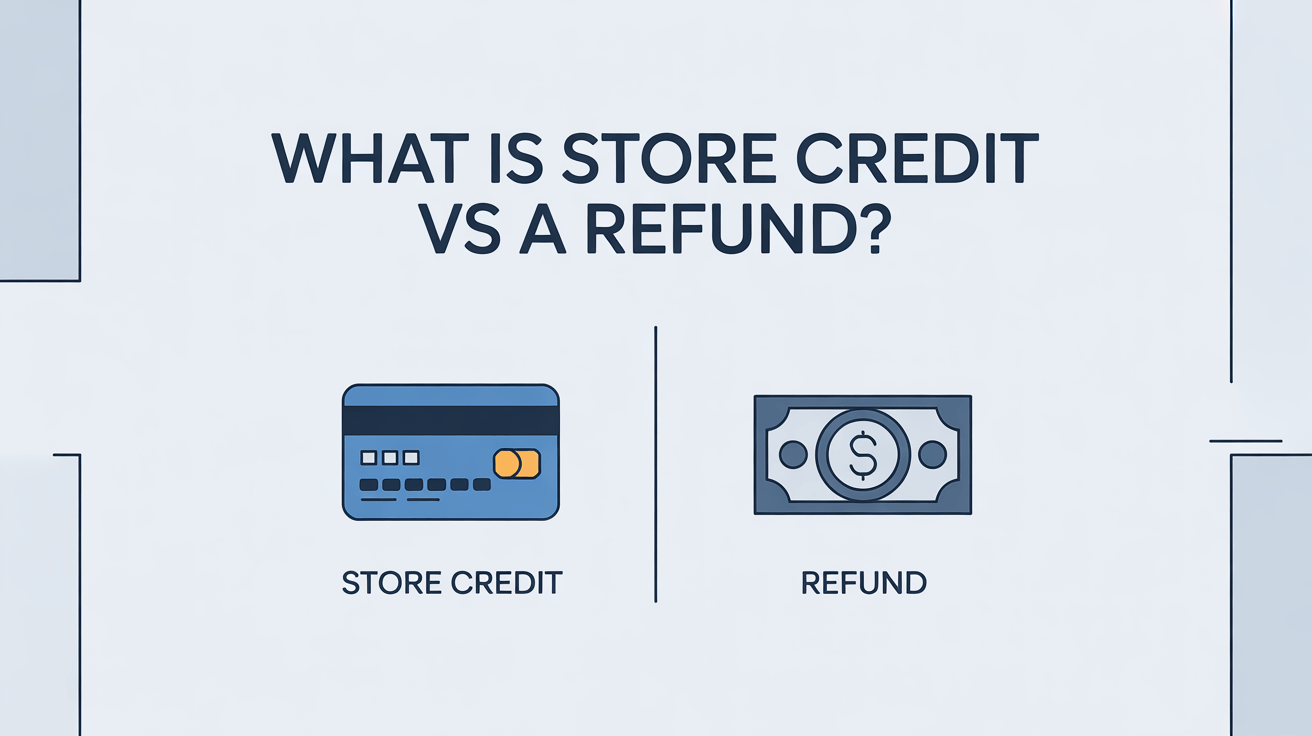
Although the two terms are often mentioned together in refund policies, they work very differently in practice. Understanding the difference helps customers interpret return conditions correctly and avoid confusion after a purchase.
What Is a Refund?
A refund means the store returns money back to the customer after a return.
In most cases, a refund:
- Goes back to the original payment method
- Reverses the original transaction
- Does not require a future purchase
Refunds are usually processed when returns meet the store’s standard conditions, such as being within a time limit or in unused condition.
For a broader explanation of how refunds are handled, see
What Is a Refund Policy?
What Is Store Credit?
Store credit is not money returned to the original payment method. Instead, the store issues a credit balance that can be used for future purchases.
Store credit typically:
- Can only be used at the same store or website
- Has a fixed value equal to the returned item
- Requires another purchase to use
- May be issued as a digital balance, code, or gift card
Some stores apply store credit automatically when refund conditions are not fully met. This situation is explained in detail in
What Does “Store Credit Only” Mean in a Refund Policy?
Key Differences Between Store Credit and a Refund
Although both relate to returns, they are not interchangeable.
Refund:
- Returns money
- Ends the transaction
- Does not require another purchase
- Goes back to the original payment method
Store Credit:
- Keeps value with the store
- Requires a future purchase
- Cannot be withdrawn as cash
- Often comes with usage conditions
The difference becomes important when return timing or item condition affects eligibility.
Why Stores Offer Store Credit Instead of Refunds
Stores may choose store credit over refunds for several reasons:
- To reduce payment processing costs
- To encourage repeat purchases
- To manage inventory returns
- To apply different rules for sale or promotional items
This approach is common across retail, online shopping, and digital services.
Which Is Better for Customers?
Neither option is automatically better in all situations.
- A refund offers flexibility and finality.
- Store credit can be useful if the customer plans to shop again.
The best option depends on the customer’s intent and how clearly the policy is communicated before purchase.
When Store Credit Is Commonly Used
Store credit is often applied when:
- The return is outside the standard refund window
- The item was purchased during a sale or promotion
- The item does not meet full refund conditions
- The policy states “store credit only”
In these cases, the refund method is replaced by credit rather than cash.
How Refund Policies Usually Explain the Difference
Refund policies often separate these terms clearly, but the wording can be easy to miss.
You may see phrases such as:
- “Refunds issued to original payment method”
- “Store credit only”
- “Exchanges or store credit available”
Each phrase signals a different return outcome.
Summary: Store Credit vs a Refund Explained Simply
The difference between store credit and a refund is how the return value is given back. A refund returns money, while store credit keeps the value with the store for future use.
This article explains the distinction in general terms and focuses on understanding refund policy language, not predicting outcomes for specific stores.